

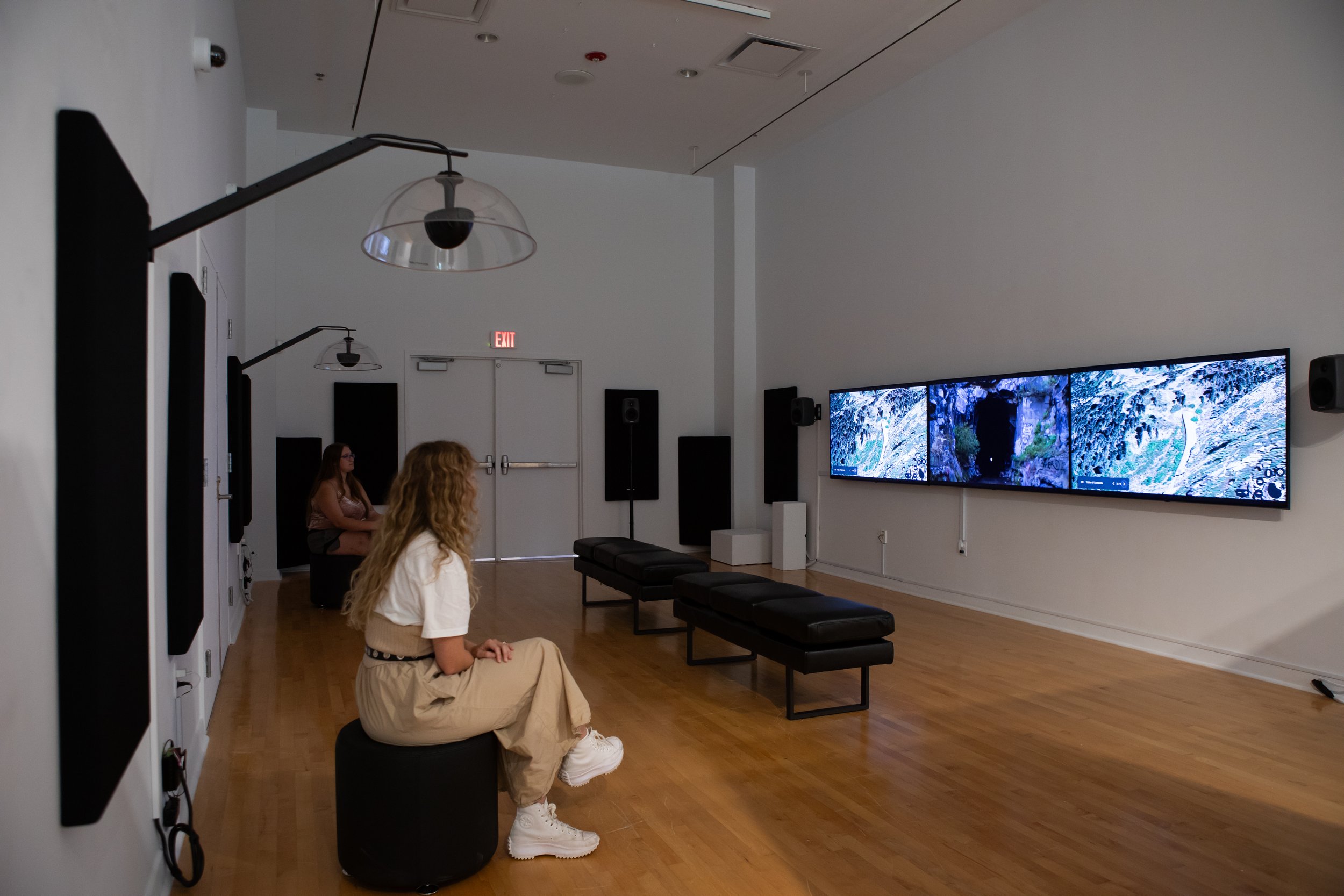
Here There: (Re)Collecting Labor on the American Railway
Immersive Media Installation. 3 channel video, 4.1 surround sound, 2 parabolic dome speakers
Collaboration with video artist Stefani Byrd and Alarm Will Sound.
Here There is an immersive multimedia installation exploring complex historical relationships among labor, industrial infrastructure, and collective memory through an examination of three significant Transcontinental Railroad sites in Northern California: Donner Pass, Bloomer Cut, and Roseville Train Yard.
The project weaves together historical documents with contemporary footage and audio recordings in order to reorient the framing of the history of the Transcontinental Railroad, disrupting the “Golden West” national narrative and reframing the mythos of the Transcontinental Railroad as a metaphor for colonialism and capitalism in America. It also engages how the technologies of film and locomotion reshaped our relationship to both time and space, expanding us beyond our embodied sensorial experience of the world. Here There does not take the perspective of history told through the lens of “great men”—such as the big four railroad barons. Instead, it focuses on canonically marginalized communities such as the pre-contact indigenous Martis, the Maidu tribe, Chinese railroad workers, Pacific Fruit Express ice house laborers, and contemporary unionized railroad crews.
The work is a collaboration between composer and sound-designer Caroline Louise Miller, visual artist Stefani Byrd, and contemporary music ensemble Alarm Will Sound. The installation features interviews with Dr. Gordon H. Chang, History Professor at Stanford University and author of The Ghosts of Gold Mountain and Dan Stone, retired train conductor of over 30 years from the DeButts Switch Yard in Chattanooga, Tennessee. Stone is also a longtime friend and former colleague of project lead Stefani Byrd’s deceased father, J. Byrd.
Chapter 1: Donner Pass
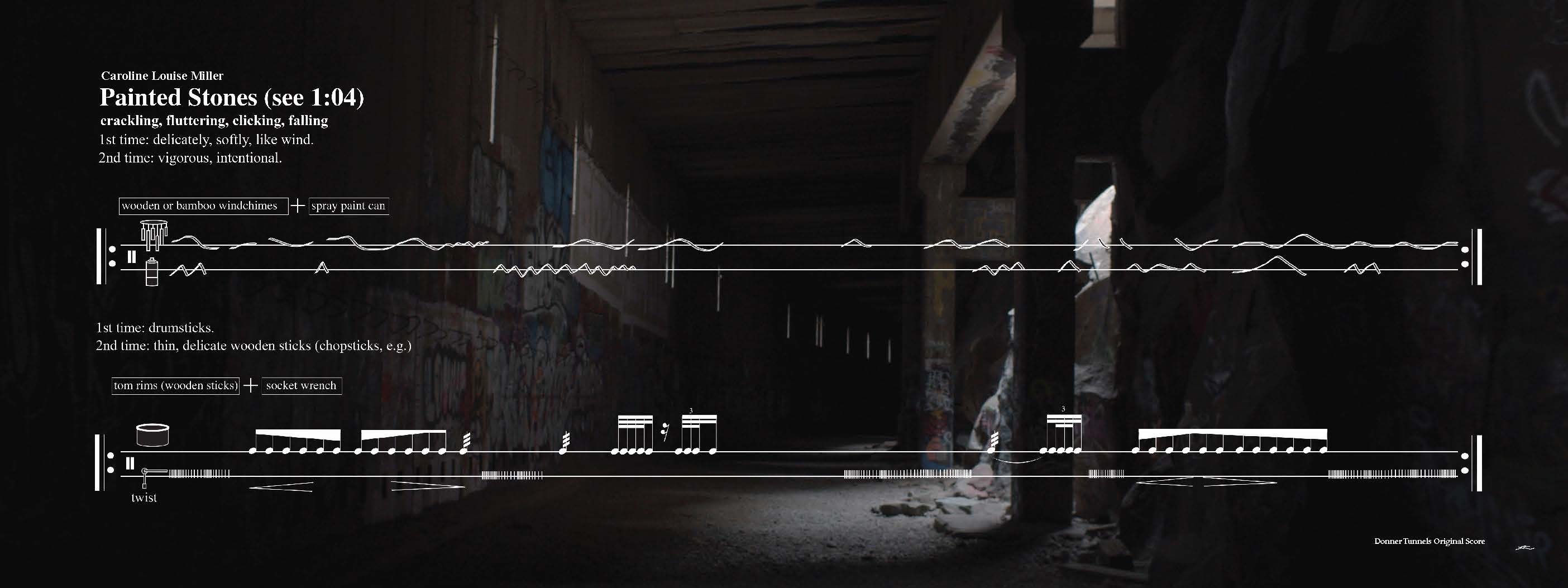





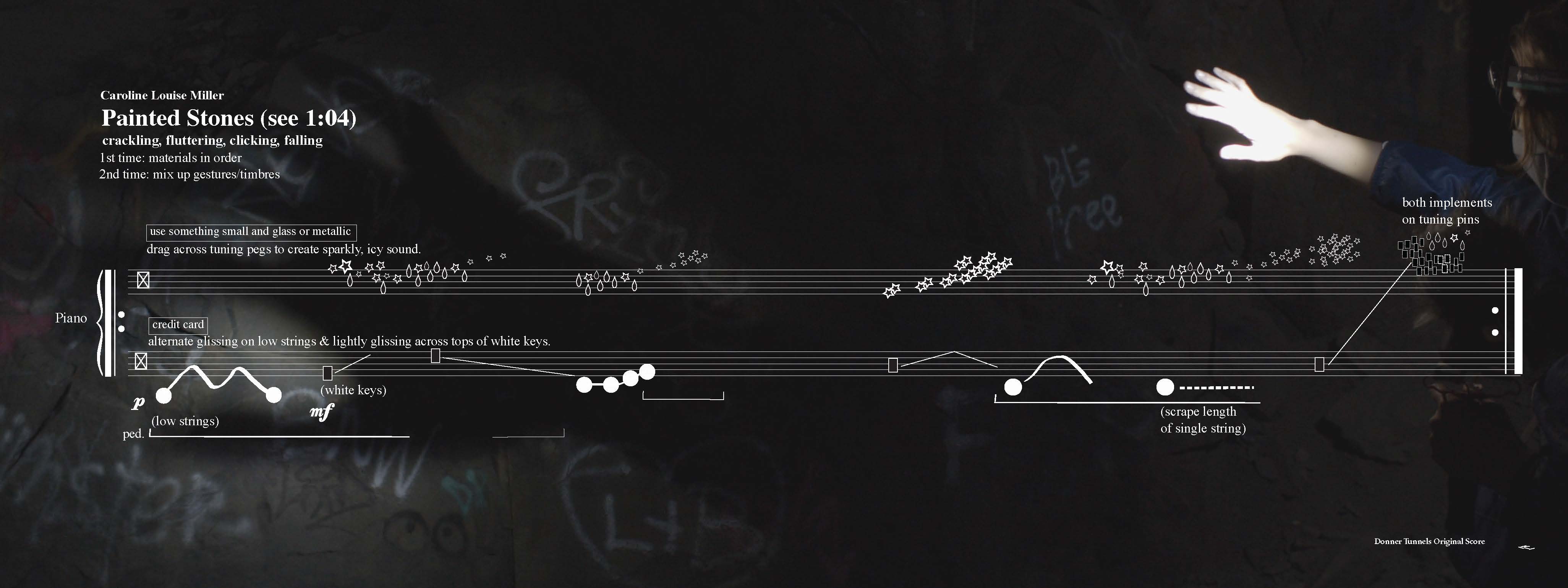
The camera takes a point of view trek through the Donner Pass Tunnels in the Sierra Nevada Mountains in Northern California, once a pivotal portion of the Transcontinental Railroad. This site is layered with the marking of three distinct communities over thousands of years: the pre-historic Martis tribe, Chinese Transcontinental railroad workers, and present day graffiti writers. The site is in effect a palimpsest that bears the marks of each community, one atop the other. Sonically, Donner Tunnel begins with the rumble of a thunderstorm at Donner Pass, a field recording captured during our first afternoon onsite. Speaking with Dr. Gordon Chang about Donner Pass, he discusses the volatile weather conditions in the Sierra mountains, and how Chinese Railroad Workers persevered through rain, snow, ice and extreme temperatures. As we hiked into the summit tunnel, large stones underfoot reverberated up and through a half-mile of darkness yawning toward a bead of light. I touched the corrugated granite walls of the tunnel–blasted away with black gunpowder over a century prior. This space formed the impression for scores called “painted stones” and “wind tunnel,” in which the 16 members of Alarm Will Sound were invited to imagine and recreate visual and tactile impressions of the space through instrumental techniques. For example, the pianist uses a glass cocktail rod on the metal tuning pegs of the piano to create a sonic impression of sifting through mineral fragments. Members of Alarm Will Sound were also given footage of walking through the tunnel to review prior to recording.
Chapter 2: Bloomer Cut
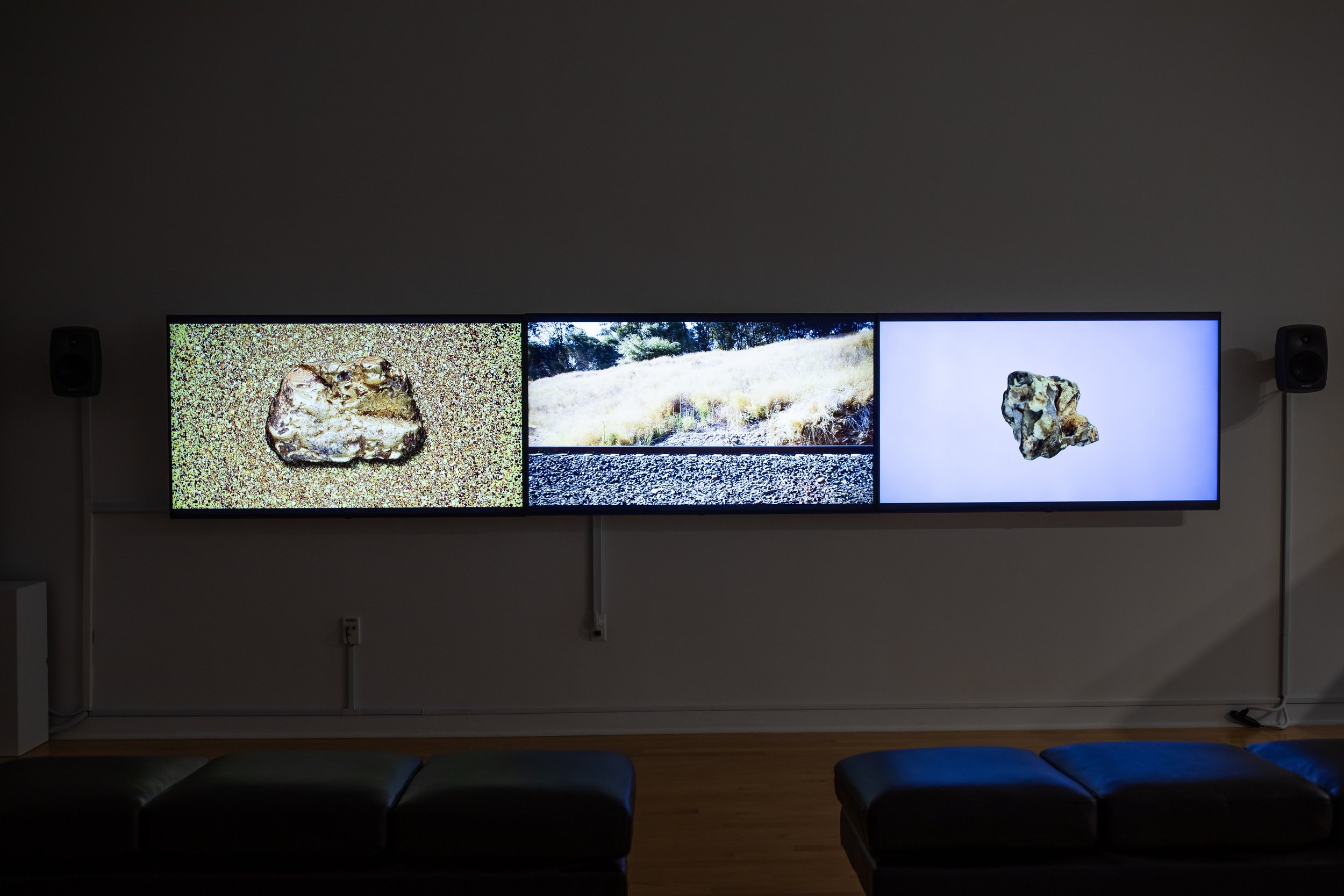
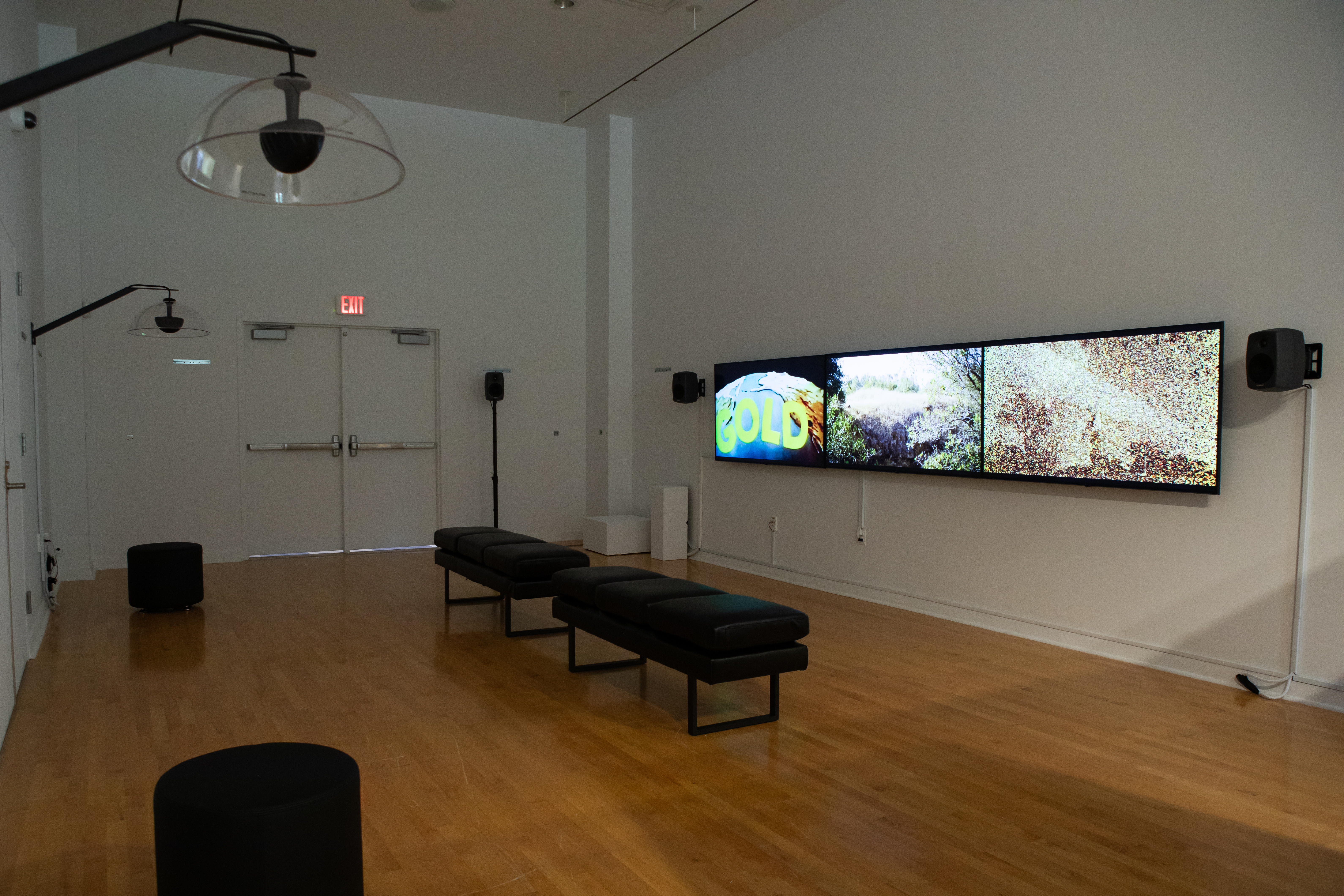




Bloomer Cut is located at the edge of a suburban neighborhood in Auburn, California. When completed in 1864, it was considered the “Eighth Wonder of the World”. Today it is marked by a small sign and is still an active line, one of the few Transcontinental Railroad sites to survive to present day. The sequence is filmed as an embodied phantom walk through the woods to a once revered feat of human engineering, presented alongside archival film and photographs related to the history of the region. It seamlessly oscillates between past and present to reveal the detrimental impact of the philosophy of Manifest Destiny and settler colonialism on indigenous communities. We filmed and recorded at Bloomer Cut on a blazing hot day in August 2020. Sonically, the sound of modern infrastructure, roads and highways, recedes as you wander through a narrow trail surrounded by high grass. The soundscape drops to near silence as you make your way to the bottom of the cut. At the bottom, there is only the faintest of rustling insects in the grass, and barely enough wind to stir the vegetation. In creating the score for Bloomer, I wanted to work with an inversion of this sonic arc, recalling the potency of the site’s conflicted, complex, and violent past. As we creep away from the road, through tall grass, shimmering strings and thin, high drones ebb and flow ominously. At the bottom of Bloomer Cut, the score culminates in an avalanche of rock and alludes to intrusive train horns through the use of a contrabassoon solo.
Chapter 3: Roseville
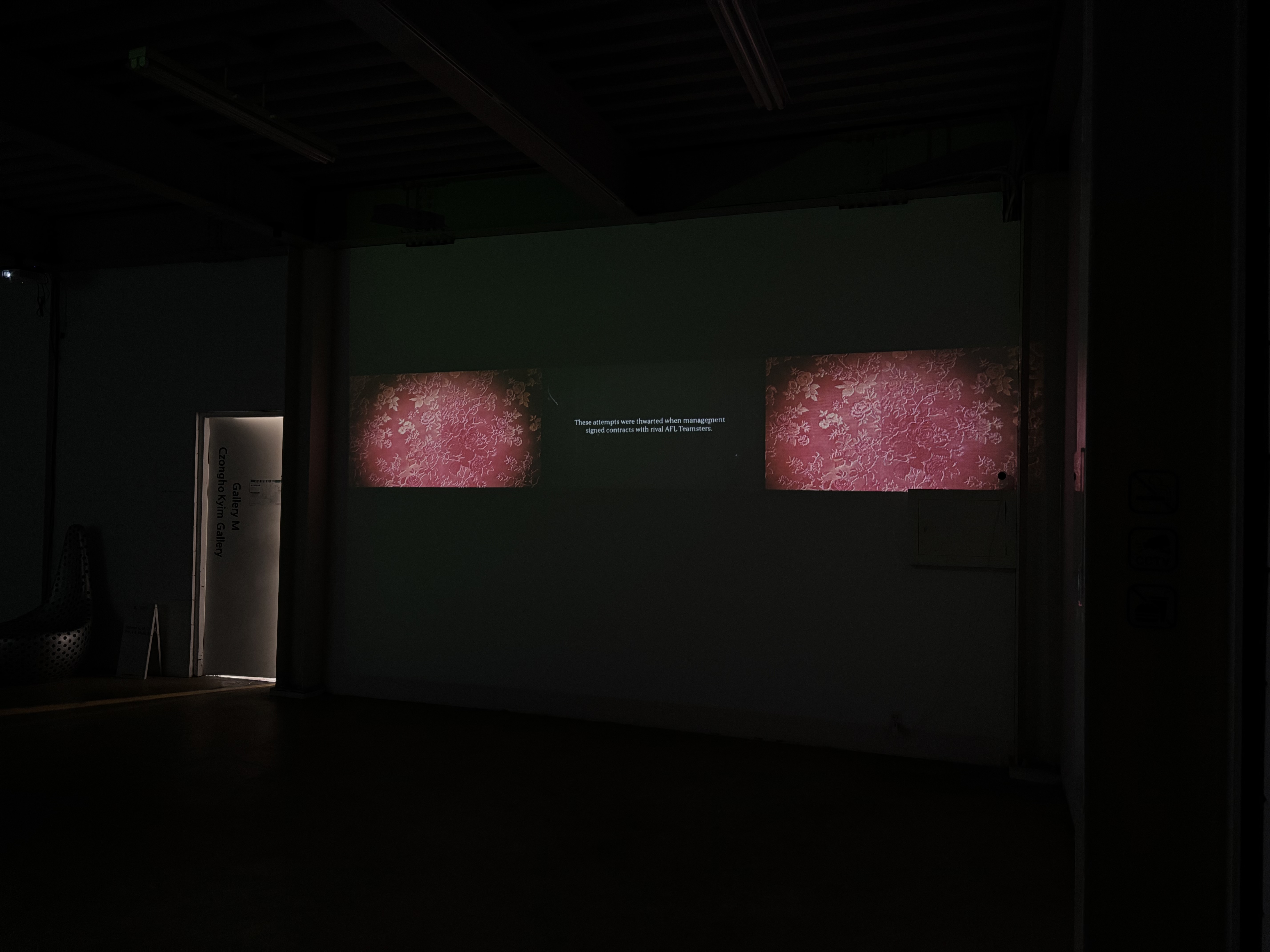



Chapter Three focuses on the J.R. Davis Yard in Roseville, California which is the largest railroad yard in the Western United States. The city of Roseville owes its existence to trains, as it evolved out of the lines of the Transcontinental Railroad. This portion of Here There also focuses on the experiences of more contemporary railroad workers and how the rail lines continue to shape the United States.
“Roseville,” with its driving shots and visual focus on layered histories, invites the sonic concept of a collage that shifts on a whim in response to the dancing landscape outside the car window. Fleeting grooves weave in and out of the texture, reflecting the rhythmic and repetitive nature of infrastructure–signposts at set intervals, uniformly lined-up train cars, and the railroad ties themselves. Layered within the music are field recordings, including an onsite capture of clanging railroad bells, and a recording of myself rummaging through 19th century relics at an industrial salvage yard in my hometown. Invoking industrial labor, these field recordings materialize as a rough patina on the texture of the sound, drawing the eye to archival footage layered into the film. A lengthy overhead shot of the Roseville Trainyard appears in the middle of the film, offering a new perspective. A large stain on the pavement, seen from above, gives the impression of a crime scene, referencing ongoing issues with railroad worker safety. I layered in two versions of a melancholy English Horn solo here, which usher us out of a dark tunnel as driving shots resume. The shift in musical tone mirrors the shift in perspective in the latter half of the film.